Logistics · 6–8 minute read
Planning
The tower is well signposted from the street, but downtown Toronto is a slow city to move around by car, and the queue at the base rewards a little preparation. These are the practical notes I’ve arrived at over fifteen visits.
Getting there from Union Station
By far the easiest way in. From the concourse at Union, follow signs south for Skywalk / Rogers Centre / the tower. You will walk under Front Street through the wide, brightly lit pedestrian tunnel, then up through the Skywalk — a covered raised walkway that runs south-west along the railway lands. On a cold or wet day this is a mercy. The walk is about ten minutes at a normal pace, longer if you stop for the small heritage exhibits along the way. You arrive at the plaza slightly north of the base.
From the west end you can also take the 509 or 510 streetcar to Bremner. From the north, a walk down University or Bay from Osgoode or St Andrew stations is about fifteen minutes and takes you past the financial district, which is a pleasant scale-comparison before you go up.
The PATH
Toronto’s downtown is stitched together by an underground pedestrian network called the PATH. From November through April this is genuinely useful: you can walk from most of the downtown hotels to the base of the tower without going outside more than a hundred metres. The signage is not always intuitive — look for the coloured letters P A T H at every junction. If you get lost, aim south and up: you want to surface at Union Station or the Skywalk, and both are well-marked.
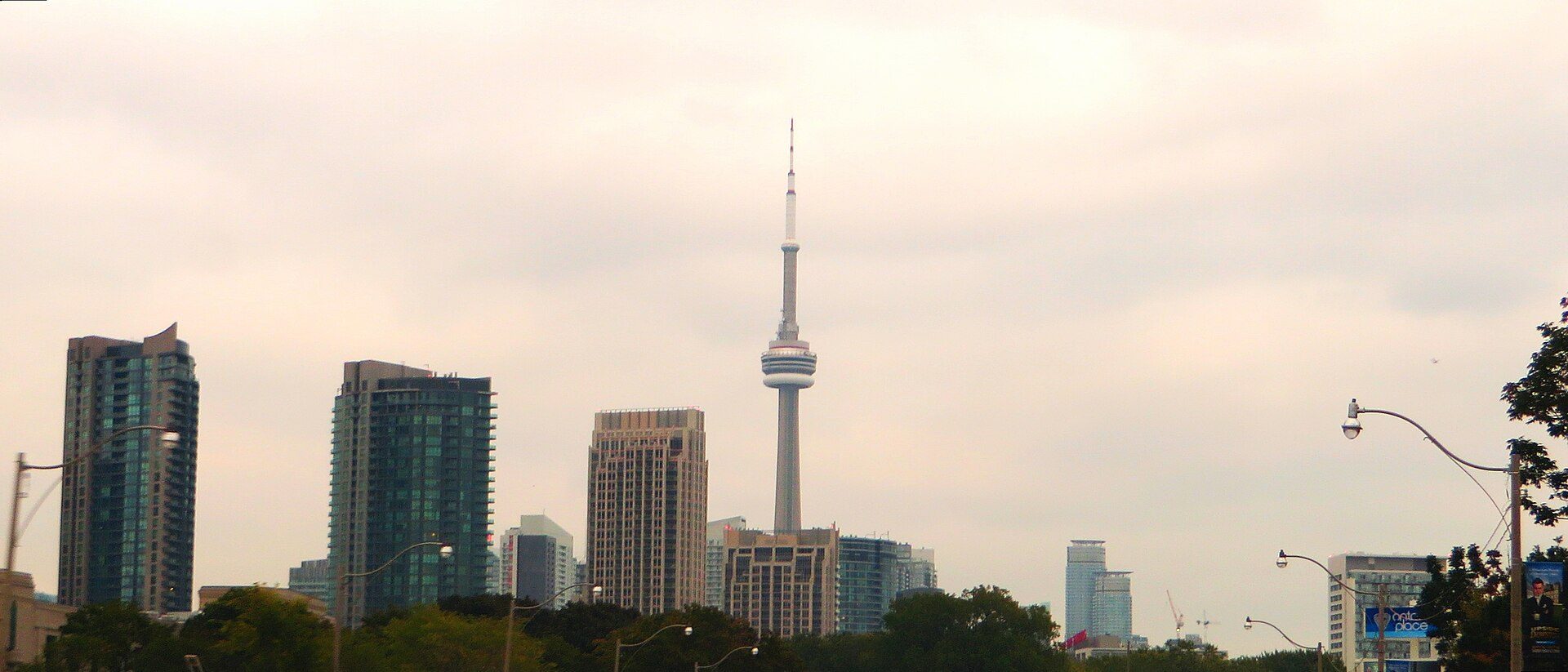
Parking downtown — the honest reality
Downtown Toronto is not a driving city and I would gently discourage it if you have any alternative. The lots directly under the tower and around the Rogers Centre are convenient but expensive, and they fill on any weekend the Blue Jays are playing or Toronto FC is at home. The Green P lots a few blocks north (around Wellington and John) are cheaper, still walkable, and less likely to trap you in event-day traffic on the way out.
My rule: if you have driven in from out of town, park at a subway station on the edge of the city and take the train in. Yorkdale, Kipling and Kennedy all have park-and-ride lots and the trip in is thirty to forty minutes on a reliable subway. If you have flown in and are staying downtown, do not rent a car at all until the day you leave.
Timed entry, explained editorially
Most visits are organised around an arrival window — a half-hour slot rather than an open door. That is how a busy downtown attraction keeps the elevator from becoming a scrum. A more flexible day-pass exists too; it costs the visitor more patience at the plaza, not more of my time, because I do not sell either version.
If you are going up for a specific view — a sunset, a particular quality of light — pick the window that matches. If the weather is a coin-toss, leave yourself room to wait for a break in the cloud. In autumn I prefer the flexible option; in summer I usually pick a fixed hour.
I am not the operator. I do not sell tickets and I do not quote fares. Hours, availability and any add-ons live on the official channels. This journal is a visitor’s note.
Best times of day
Three windows earn most of my visits:
- Weekday morning (09:30–11:00). Smallest crowds. Cool, still light. The city has just woken up and the light on the east-facing windows is exceptional.
- Late afternoon in summer (17:30–19:00). The sun begins to drop over the west end. Good if you are not staying for sunset but want a warm, colour-rich version of the view.
- Blue hour (about twenty minutes after sunset). The single most photographed window in the entire building. The sky goes a specific colour of deep blue and every building in the city lights up simultaneously. Worth planning around.
Weather considerations
Cloud level matters more than temperature. On a day when the low cloud sits at eight hundred metres, the upper level of the tower is inside the cloud and you will see nothing at all. On the same day the main level may be entirely in the clear, with a curious ceiling of cloud visible about a hundred metres above your head. Look at the actual cloud forecast, not just the sun icon.
Wind matters for the outdoor terrace. If the wind at ground level is uncomfortable, the terrace will be considerably worse, because it is unshielded and about three hundred and forty metres up. That does not mean skip the visit; it means enjoy the enclosed side and give the terrace a polite two minutes.
Rain is fine for the visit and often good for the pictures. Fog cancels the visit.
Neighbours to pair on the same day
The tower sits at the south edge of the Entertainment District, surrounded by three good half-day pairings:
- Ripley’s Aquarium of Canada — right at the base, minutes away. Especially good with children, or on a day when the weather has closed the view upstairs.
- Toronto Railway Museum — a small, well-curated exhibit in Roundhouse Park immediately east of the base. If you are the kind of person who was excited by the elevator shaft, you will like this.
- Harbourfront Centre — ten minutes south to the waterfront. In summer there is almost always something happening; in winter it is a quiet walk along the water with excellent skyline views back inland.
None of these are affiliated with this journal or with the tower operator. They are just neighbours worth knowing about.
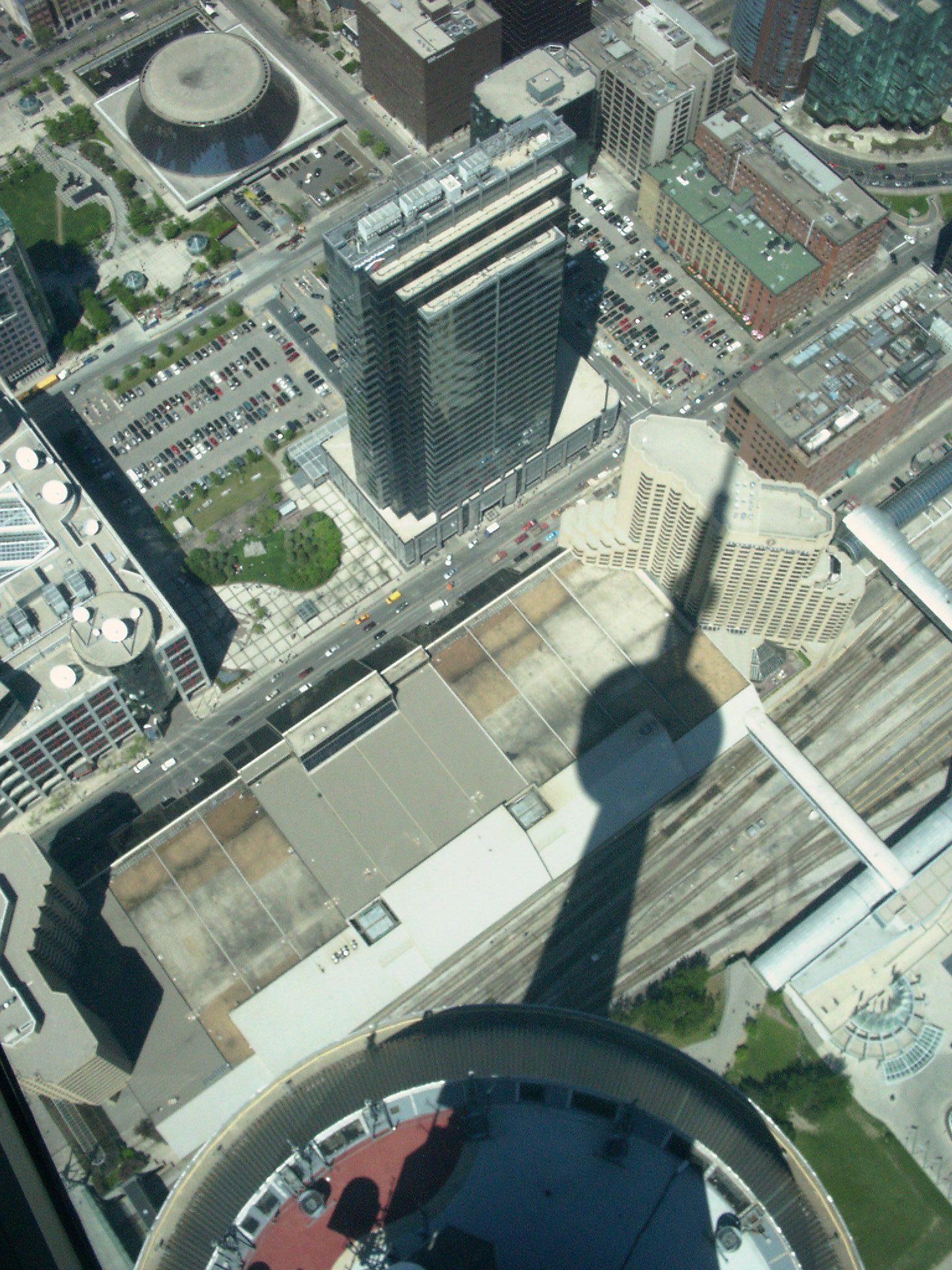
One honest criticism
The exit funnels you through a large, brightly lit gift shop. There is no way to skip it without a small polite fuss. If you are visiting with young children who have just spent an hour looking at trains and boats from an impossible height, you may as well accept that you are going to leave with a small toy.
Next: FAQ, or return to the home page.